
-4%
NEU!
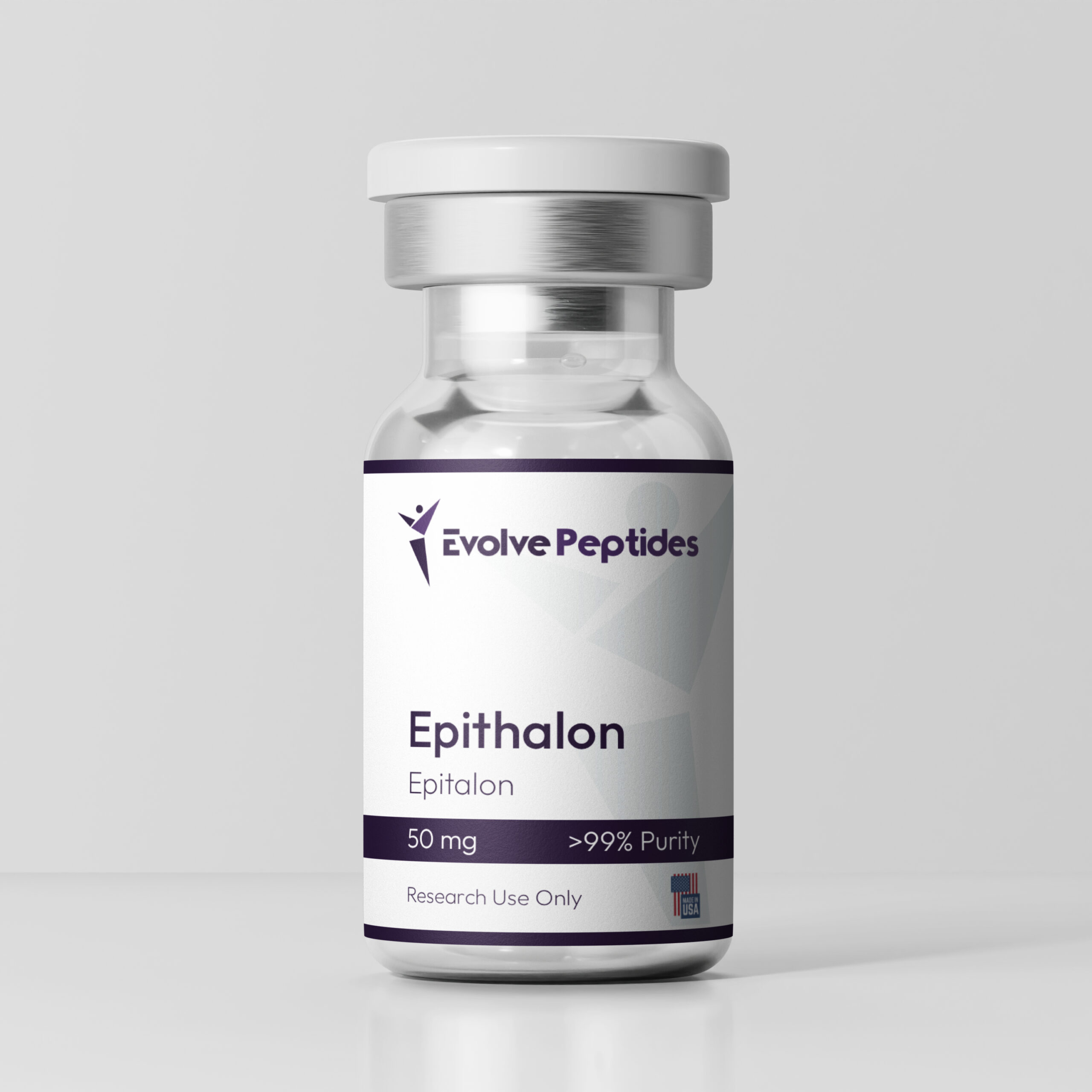
Epithalon (Epitalon) 50 mg
$ 94.77
What is Epithalon (Epitalon)?Epithalon (also known as Epitalon) is a synthetic tetrapeptide made up of four amino acids: alanine, glutamic acid, aspartic acid, and glycine (Ala-Glu-Asp-Gly). Developed for scientific research, Epithalon is studied primarily for its potential impact on telomerase activation, cellular longevity, immune modulation, and circadian rhythm regulation.This research peptide is valued for its stability in lyophilized form, excellent solubility in sterile water, and high purity, making it suitable for controlled laboratory settings. Its structure allows for easy handling in various in vitro and in vivo research protocols.Note: Evolve Peptides sells Epitalon for research use only. It is not approved for human consumption, veterinary use, or therapeutic applications.Epithalon Mechanism of Action (Based on Research)Epithalon (Epitalon) is a synthetic tetrapeptide (Ala-Glu-Asp-Gly) investigated for its potential to modulate aging-related biological processes. Its mechanisms of action have been primarily explored in non-clinical studies involving animal models, cell cultures, and limited human cohorts.The following pathways are among the most studied.Telomerase Activation and Telomere MaintenanceEpithalon has been shown to activate telomerase, an enzyme responsible for extending telomeres.Telomeres are the protective caps at the ends of chromosomes. They are nucleotide sequences that protect chromosomal ends from degradation and fusion during replication. Telomere shortening is a key hallmark of cellular senescence (a state where cells permanently stop dividing but don’t die).By maintaining telomere length, Epithalon may delay cellular senescence and support genomic stability in aging cells. In vitro studies using human somatic cell cultures demonstrated that Epithalon significantly increased telomerase expression and activity, thereby preserving telomere length and delaying replicative senescence [1].Support of Cellular Longevity and Mitochondrial FunctionIn animal studies, prolonged administration of Epithalon was associated with increased lifespan and improved markers of physiological function in aging rodents. This effect is believed to be linked to reduced oxidative stress and improved mitochondrial efficiency.In rodent models, long-term administration of Epithalon was associated with increased lifespan, reduced tumor incidence, and improved markers of physical function in aged animals. The proposed mechanism includes modulation of oxidative stress and mitochondrial biogenesis. [2].By influencing gene expression involved in antioxidant defense and apoptosis regulation, Epithalon may enhance cellular resistance to oxidative damage, a critical factor in the aging process. Evidence also suggests improved function of mitochondrial enzymes such as cytochrome c oxidase, which play roles in energy metabolism and redox balance.Immune Modulation and Thymic ActivityResearch suggests Epithalon may influence thymic peptide production and immune homeostasis in aged organisms.In animal studies on aging, Epithalon has demonstrated immunomodulatory properties. It appears to restore or enhance T-lymphocyte function and normalize cytokine profiles, possibly by acting on the thymus gland—an organ that undergoes involution with age.In these studies, Epithalon administration in elderly or immunosuppressed animals leads to increased production of thymic peptides and improved immunological parameters, including CD4/CD8 ratios and natural killer (NK) cell activity [3].Regulation of Circadian Rhythms and Pineal FunctionEpithalon was originally derived from epithalamin, a peptide extract of the pineal gland. Subsequent studies have shown that it can influence melatonin secretion, a key regulator of circadian rhythms and sleep-wake cycles.In aging non-human primates, Epithalon helped normalize the circadian release of melatonin by restoring pineal gland function, which typically declines with age. These regulatory effects may underlie observed improvements in sleep-wake patterns and neuroendocrine homeostasis in aged subjects [3].Epithalon Research Applications (Benefits)Epithalon is gaining attention for its potential anti-aging benefits. Research highlights its role in extending cellular lifespan, enhancing immune function, regulating melatonin secretion, and protecting genomic stability.These diverse applications position Epithalon as a promising compound in age-related health and regenerative medicine studies.1. Telomere Support & Cellular LongevityEpithalon has been demonstrated to significantly activate telomerase and elongate telomeres in human somatic cells cultured in vitro.In a seminal study, researchers added Epithalon to human fetal fibroblasts that lacked detectable telomerase activity. The result: telomerase catalytic subunit expression was reactivated, enzyme activity increased, and telomere lengthening occurred, effectively extending the cells’ proliferative capacity from ~34 to over 44 passages [1].This bypass of the traditional Hayflick limit suggests a profound impact on cellular replicative lifespan. In vivo, rodent studies indicate that Epithalon reduces chromosomal aberrations in aging mice, which is a marker of genomic stability [3].Circadian Rhythm & Melatonin RegulationEpithalon’s origins from epithalamin link it directly to melatonin regulation and circadian rhythm dynamics. In aged non-human primates and elderly humans, studies show that Epithalon or epithalamin administration restored nocturnal melatonin secretion, suggesting a rejuvenation of the pineal endocrine function [4].In controlled lighting studies involving rodents subjected to constant illumination (a stressor that disrupts circadian patterns), intermittent Epithalon treatment normalized melatonin and cortisol rhythms, partially preserving typical day–night physiological cycles [2][4][5].Additionally, human thymic–pineal studies documented improved sleep–wake hormone regulation following peptide administration. For researchers, these findings highlight Epithalon as an intriguing tool for exploring pineal-pineal axis regulation, chronobiology, and age-associated endocrine decline.Immune System Modulation & Thymic SupportSeveral animal studies reveal that Epithalon may influence immune organ restoration, particularly the thymus gland, which naturally involutes with age.In neonatal hypophysectomized or aged chickens and mice, peptide treatment promoted thymic tissue recovery, increased lymphocyte proliferation, and elevated interferon-gamma production from T-cells [4].In aged CBA mice, in vitro treatment with Epithalon (and its pineal precursor epithalamin) enhanced the thymus microenvironment by increasing stromal precursor fibroblasts and thymic serum factor. It also raised CD4⁺ T-cell proportions in the bone marrow and modulated splenic CD8⁺ cells, indicating rejuvenation toward a younger immune phenotype [5].In aged CBA mice, in vitro treatment with Epithalon (and its pineal precursor epithalamin) enhanced the thymus microenvironment by increasing stromal precursor fibroblasts and thymic serum factor. It also raised CD4⁺ T-cell proportions in the bone marrow and modulated splenic CD8⁺ cells, indicating rejuvenation toward a younger immune phenotype.Oxidative Stress Reduction & Antioxidant EffectsResearch indicates that Epithalon may play a role in mitigating oxidative damage—a key mechanism in cellular aging.In aged rat models, treatment increased activity of antioxidant enzymes like superoxide dismutase (SOD), glutathione peroxidase, and glutathione-S-transferase, improving overall oxidative defense.Cell culture studies further reveal lowered lipid peroxidation and markers of reactive oxygen species following Epithalon exposure—indicating a protective effect on cellular membranes and biomolecules . These antioxidant effects, combined with telomere stabilization, support a multi-layered model of how Epithalon might delay molecular aging [3].Oncostatic & Genomic Integrity EffectsEpithalon’s potential oncostatic (anti-cancer) properties are supported by animal studies showing reductions in spontaneous tumor incidence and metastasis, especially among aged rodents [4].These outcomes reflect the peptide’s broader roles in DNA stabilization and immune surveillance, alongside telomere maintenance.Mechanistic work also highlights Epithalon’s ability to inhibit MMP-9, a matrix metalloprotease involved in tumor invasiveness and metastasis. In cultured fibroblasts, this inhibition suggests regulatory control over cell migration and extracellular matrix remodeling [3].Epithalon Peptide CharacteristicsMolecular Formula: C₁₄H₂₂N₄O₉CAS Number: 307297‑39‑8Synonyms: Epitalon, Epithalon, Epithalone, AEDGMolar Mass: 390.35 g/mol (≈ 390.34 Da)Appearance: White to off-white lyophilized powderSolubility:≥50 mg/mL in water (≈128 mM)Soluble in DMSO up to ~250 mg/mL (≈496 mM)Storage RecommendationsDry, lyophilized form: Store at ≤ –20 °C (preferably –80 °C for long-term)In water/PBS/Saline – store at –80 °C up to 6 months, or –20 °C up to 1 monthEpithalon vs FOXO4-DRI vs Thymalin ComparisonFeatureEpithalonFOXO4-DRIThymalinTypeSynthetic tetrapeptide (Ala‑Glu‑Asp‑Gly)Cell-penetrating senolytic peptide (D‑Retro‑Inverso peptide targeting FOXO4–p53 interaction)Polypeptide drug derived from calf thymus; mixture of small peptidesTargetsTelomerase activity, pineal and thymic functionSenescent cells via FOXO4–p53 pathwayThymus gland, T-cell maturationMechanism ComplexityModerate (telomerase neuroendocrine immune)High (precision senolytic targeting) (Disrupts FOXO4–p53 in senescent cells)Simple/moderate (immune regeneration)Research StagePreclinical and limited human trialsPreclinical (cell culture, mice); In vitro and animal models of senescence & agingPreclinical and historical clinical use in immune deficiency and infectionsLongevity Focus (Research)Delayed aging, extended lifespan in rodentsSenescent cell clearance; improved function in aged miceMay restore circadian-linked immune rhythms; less direct lifespan studyImmune ModulationYes (restores pineal–thymic axis);Thymic and pineal axis balanceIndirect via clearing SASP-producing cellsDirect enhancement of T‑cells, NK activity, and immune recoveryCircadian SupportIndirect; Affects melatonin rhythm via pineal peptide actionNot reportedMild influence; May modulate circadian immune rhythms––––Approval StatusResearch use onlyResearch use onlyResearch use only (past clinical use in some countries)DisclaimerNot for human consumptionNot for human consumptionNot for human consumptionSafety and Side Effects in StudiesIn one 6.5-month study on C3H/He mice receiving 0.1 μg Epitalon daily, no toxic effects were observed, even as tumor incidence and metastases decreased [6].In another, a lifespan trial in Swiss-derived SHR mice (1 μg/mouse per month) reported no changes in food intake or body weight, while chromosomal aberrations decreased and maximum lifespan increased [7].Certificate of Analysis (COA)Every batch of Epithalon available at Evolve Peptides is verified through independent third-party laboratory testing. This ensures that each vial meets rigorous specifications for:Purity (≥99%)Identity verificationSterility and microbial testingEndotoxin levels (where applicable)Our COAs are batch-specific and can be provided upon request. For transparency and quality assurance, we make sample COAs available for review on select product pages.Legal DisclaimerThis product is intended strictly for laboratory research purposes and is not approved for human or veterinary use. It is supplied exclusively to qualified professionals, institutions, or laboratories conducting in vitro or preclinical studies.Epithalon sold by Evolve Peptides is not intended for ingestion, injection, or topical application in humans or animals. Any use outside of a controlled laboratory environment is expressly prohibited.This product is not for resale, and may not be used in diagnostic, therapeutic, or clinical applications of any kind. Buyers are responsible for ensuring compliance with all applicable local, state, and federal regulations regarding the use of research chemicals.Scientific ReferencesKhavinson, V. K., Bondarev, I. E., & Butyugov, A. A. (2003).Epithalon peptide induces telomerase activity and telomere elongation in human somatic cells.Bulletin of Experimental Biology and Medicine, 135(6), 590–592.https://link.springer.com/article/10.1023/A:1025493705728The International Peptide Society. (2018).Epithalon monograph.Retrieved July 2025, fromhttps://peptidesociety.org/wp-content/uploads/2018/07/Epithalon-Monograph-Final.pdfAraj, S. K., Brzezik, J., Mądra-Gackowska, K., & Szeleszczuk, Ł. (2025).Overview of Epitalon—Highly Bioactive Pineal Tetrapeptide with Promising Properties.International Journal of Molecular Sciences, 26(6), 2691.https://www.mdpi.com/1422-0067/26/6/2691ChemicalBook. (2021, March 17).Biological effects of Epitalon.ChemicalBook. Retrieved July 10, 2025, fromhttps://www.chemicalbook.com/article/biological-effects-of-epitalon.htmKorenevsky, A. V., Milyutina, Y. P., Bukalyov, A. V., Baranova, Y. P., Vinogradova, I. A., & Arutjunyan, A. V. (2014).The protective effect of melatonin and epithalon on hypothalamic regulation of the reproductive function in female rats in a model of its premature aging and on the estrous cycles of aging animals in different lighting conditions.Advances in Gerontology, 4(4), 67–77.https://link.springer.com/article/10.1134/S2079057014010044Labunets, I. F., Butenko, G. M., & Khavinson, V. K. (2004).Effects of bioactive factors of the pineal gland on thymus function and cell composition of the bone marrow and spleen in mice of different age.Bulletin of Experimental Biology and Medicine, 137(5), 510–512.https://pmc.ncbi.nlm.nih.gov/articles/PMC11943447/Kossoy, G., Chepurnov, S. A., Anisimov, V. N., & Khavinson, V. K. (2006).Effect of the synthetic pineal peptide epitalon on spontaneous carcinogenesis in female C3H/He mice.Experimental Oncology, 28(1), 30–35.https://pubmed.ncbi.nlm.nih.gov/16634527/Anisimov, V. N., Khavinson, V. K., Popovich, I. G., Zabezhinski, M. A., Alimova, I. N., Rosenfeld, S. V., Zavarzina, N. Y., Semenchenko, A. V., & Yashin, A. I. (2003).Effect of Epitalon on biomarkers of aging, life span and spontaneous tumor incidence in female Swiss-derived SHR mice.Biogerontology, 4(4), 193–202.https://pubmed.ncbi.nlm.nih.gov/14501183/
Ähnliche Produkte

-16%

-11%
-4%